
EPCA Matters: Appliance Standards Keep Energy Affordable
Let's Save Energy
Alliance to Save Energy's Blog

Congress is revisiting the Energy Policy and Conservation Act of 1975 (EPCA), and one bill in particular, H.R. 4626, the Home Appliance Protection and Affordability Act, (previously known as the “Don’t Mess With My Home Appliances Act”) could undermine the affordability of our household appliances.
Passed by the U.S. House of Representatives in a nearly party line vote, the bill would upend years of bipartisan progress taming the energy wasted by our appliances and major HVAC equipment. Here’s why that matters, and why bad math and bad policy could cost consumers billions.
(Source: ASAP)
Why EPCA Exists and How it Works
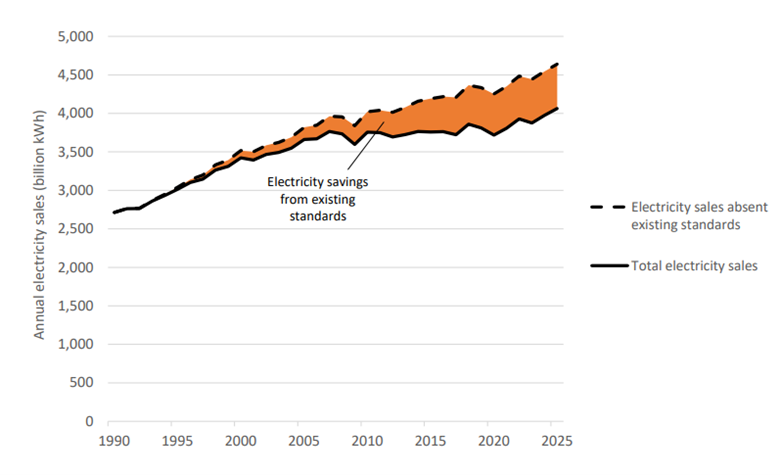
EPCA is a cornerstone energy efficiency law that, among other things, requires the U.S. Department of Energy (DOE) to set, and periodically revisit, minimum efficiency targets for appliances and equipment that we use most in our everyday lives. According to the Appliance Standards Awareness Project (ASAP), standards have saved a typical household $6,000 over the past decade.
Since its establishment under a Democratic Congress and a Republican president, the Appliance and Equipment Standards Program has grown to cover more than 70 products, representing about 90% of home energy use, according to DOE.
Like compound interest, over time, those savings really add up. Standards put in place since 1987 helped save American households and businesses $105 billion on utilities in 2024 alone.
Bad Math = Higher Utility BillsThe bill, sponsored by Rep. Rick Allen of Georgia, changes the seven-factor test DOE uses in its cost-benefit analysis when evaluating appliance standards. Under the proposal, DOE is required to account not only for the upfront purchase price of an appliance and any expected maintenance or repairs, but also for the cost of replacing that product at the end of its life. The bill also limits the value of energy‑savings benefits to just three years, even though many appliances operate for a decade or more. This approach effectively counts the purchase cost twice and treats long‑lived appliances as if they were disposable. Because it compresses long‑term, ongoing savings into an artificially short window while inflating upfront costs, the math does not provide a sound basis for economic justification. Appliances Perform Better Than EverAccording to Congressional testimony from the Association of Home Appliance Manufacturers (AHAM):
Furthermore, while performance has improved, the cost of appliances (according to AHAM), “has been flat or has even decreased,” a real selling point for the program. How the Bill Breaks the SystemDue to unprecedented executive powers and an arbitrary timeline for cost recovery, H.R. 4626 would have dire consequences for national energy consumption and affordability. In the Committee Report that justifies advancing the legislation, the Energy & Commerce (E&C) Committee writes that it passed the bill (along party lines) in order to:
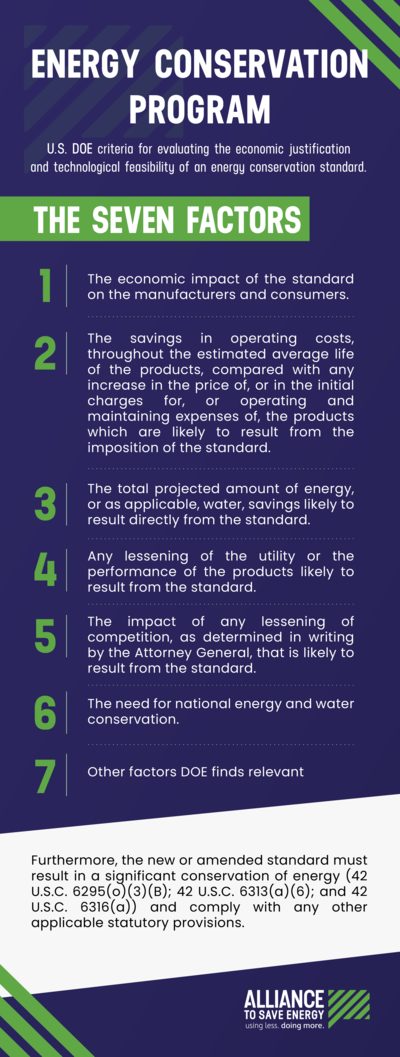
DOE’s Appliance and Equipment Standards Program already requires the Secretary of Energy to consider several factors when updating energy conservation standards (per CRS): “Any standard must result in significant energy conservation and be technologically feasible and economically justified.” |
|
Standards are Predictable and Transparent
Today’s appliance standards are consistent, based on a multiyear rulemaking schedule. Standards are promulgated through a transparent process that encourages public participation and expert engagement. Standards already must be achievable and cost-effective (42 U.S.C. §6295(o)(3)(B)).
Currently, standards are required by law to be reviewed every six years with rulemakings every eight. The Allen bill would allow the Energy Secretary to look back every two years to judge whether technical standards require revision (or not), or whether they should be eliminated entirely (a new power) all the while maintaining federal preemption over state authority.
Along with uncertainty for manufacturers who invest heavily in supply chains and bespoke manufacturing processes, this revision would result in appliances coming across American borders that don’t live up to current requirements, which is called “backsliding” and is currently against the law.
The Allen bill would give the Secretary of Energy the unprecedented power to eliminate standards that don’t meet the re-jiggered cost-effectiveness test, allowing less efficient, appliances and equipment to be sold on U.S. retail shelves.
We have learned, time and again, that energy efficiency is the cheapest, quickest, and cleanest way to meet energy needs, and that the United States should invest in more energy efficiency, not less.
Principled, Bipartisan Reform
Amending EPCA should be a bipartisan expedition. Increasing the energy waste of 90 percent of household appliances and 70 percent of commercial building energy equipment would have a staggering effect on affordability
The Alliance to Save Energy recommends these guiding principles for bipartisan EPCA reform:
- Transparency
- Consistency and predictability for manufacturers
- Fuel neutrality
- Technological feasibility
- Economic justification rooted in sound analysis
These are the foundations of a functional energy efficiency framework. H.R. 4626 undermines each of them.
The Alliance will continue to work with energy efficiency champions in the U.S. Senate to support EPCA and the appliance standards program, which have a 50-year track record of reducing energy waste and delivering cost savings for all Americans.

STAY EMPOWERED
Help the Alliance advocate for policies to use energy more efficiently – supporting job creation, reduced emissions, and lower costs. Contact your member of Congress.
Energy efficiency is smart, nonpartisan, and practical. So are we. Our strength comes from an unparalleled group of Alliance Associates working collaboratively under the Alliance umbrella to pave the way for energy efficiency gains.
The power of efficiency is in your hands. Supporting the Alliance means supporting a vision for using energy more productively to achieve economic growth, a cleaner environment, and greater energy security, affordability, and reliability.